
 Date: Sep.09.2020
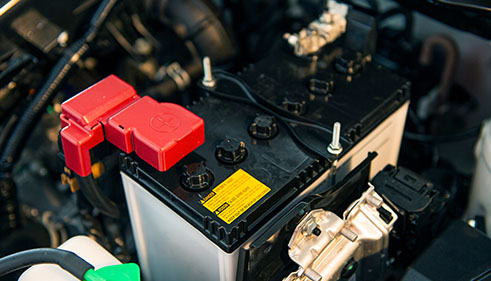
Colloidal lead-acid batteries are an improvement on ordinary lead-acid batteries with liquid electrolytes. Sulfuric acid electrolyte is replaced by colloidal electrolyte, which is superior to ordinary batteries in terms of safety, storage capacity, discharge performance, and service life. Many people may experience swelling when using this type of battery, so how does this phenomenon occur? The phenomenon of colloidal lead-acid battery shell expansion is usually solved by our technicians:
Step 1: Cancel the continuous current equalization function of the switch power supply to avoid battery swelling caused by overcharging.
Step 2: Connect the temperature sensor of the switch power supply to the battery cabinet, so that the float voltage of the switch power supply can be adjusted according to the ambient temperature.
Step 3: Add over temperature protection. When the temperature reaches 40 ℃, the system automatically switches to float charging operation to avoid battery swelling caused by continuous high current charging.
Step 4: In order to prevent overcharging of the battery and shorten the average charging protection time, the average charging protection time is changed from 18 hours to 10 hours (the setting of the average charging protection time is to prevent the battery from thermal runaway. When the average charging current cannot be reduced to the set average float charging conversion current value, the system will forcibly switch to float charging within the specified time).
Step 5: Extend the timed equalization time to avoid overclocking and high current equalization. Change the timed equalization time from the set value of 100 days to 180 days.
Finally, the equalization time is too long: In order to avoid battery swelling and expansion caused by overcharging, we can reset the equalization float charging conversion condition, changing the original setting of a current value of 10mA/Ah as the equalization charge conversion condition to automatically switch to float charging operation when the current value drops to 20mA/Ah.
We use this method to modify the charging parameters of the battery mainly to avoid overcharging the colloidal battery by the switching power supply while ensuring that the battery is fully charged. This can better protect the battery pack and prevent the expansion of the colloidal lead-acid battery. In addition, it is also to prevent poor exhaust caused by quality problems of the safety valve. Therefore, in daily inspections, attention should be paid to strengthening the inspection of the safety valve. At the same time, battery manufacturers are required to further improve the quality testing and manufacturing process of the safety valve to ensure that it can open and exhaust normally after reaching the opening threshold.
In general, we solve the swelling phenomenon of colloidal batteries in this way. After observing for a period of time, the colloidal battery no longer shows bulging of the shell and is operating normally
Friendly reminder: The temperature in the south of our country is higher than that in the north, so it is not possible to set many things according to the conditions in the north. We should reasonably set equal charge to floating charge according to the characteristics of gel battery, and ensure that the battery is fully charged. The threshold current value and the equalizing protection time can avoid the expansion of the gel battery case due to overcharging. At the same time, it is necessary to strengthen the overheating protection of batteries and the inspection of safety valves. If problems are found, they should be corrected in time to improve the use of gel batteries. Efficiency and service life. In this way, the advantages of gel battery are fully utilized, such as energy saving, reduction of lead and acid pollution, etc. If you still don't understand certain content, you can consult us for battery maintenance and repair.


Copyright © 2026 KWEIGHT TECHNOLOGY LTD. Powered by sznbone




 LANGUAGE
 Previous article

 Apr.04.2025