

 Date: Sep.09.2020
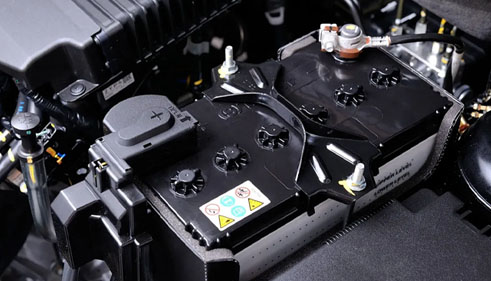
(1) Valve controlled battery. During normal use, please maintain airtightness and liquid tightness. When the internal air pressure exceeds the predetermined value, the safety valve automatically opens to release gas; When the internal air pressure decreases, the safety valve will automatically close and prevent external air from entering the battery to seal it. During the battery's lifespan, no electrolyte needs to be added under normal use.
(2) Initial charging. The first fully charged state before delivering the new battery for use is called initial charging. The initial charging usually adopts a two-stage charging method of constant current and constant voltage. When the charging current is 1-2mA/Ah and stable for 2-3 hours, it is considered that the charging has ended. The working procedure for initial charging should refer to the manufacturer's instructions.
(3) Constant current charging. The charging current is within the charging voltage range and the charging is maintained at a constant value.
(4) Equal charges. In order to compensate for the uneven voltage of the battery during use and restore it to the specified range, this type of charging is called balanced charging. The balanced charging voltage of valve controlled batteries is 2.3-2.4V, usually 2.35V, and the balanced charging current is not greater than 1.0I10A.
(5) Constant current limited voltage charging. Firstly, charge in constant current mode. When the terminal voltage of the battery rises to the voltage limit, the charging device will automatically switch to constant voltage charging until charging is completed.
(6) Floating charging. The DC output terminal of the charging device is always connected to the battery and load, and operates in a constant voltage charging mode. During normal operation, the charging device not only bears the regular load but also replenishes the battery to compensate for its self discharge and keep the battery pack at full capacity for backup. The float charging voltage of a single valve controlled battery is 2.2-2.3V, usually 2.25V. The float charging current is generally 1-3mA/Ah.
(7) Supplement charging. During storage, due to self discharge, the capacity of the battery gradually decreases and may even be damaged, requiring regular charging.
(8) Constant current discharge. During the discharge process of the battery, the discharge current value remains constant until the output voltage reaches the specified termination voltage.
(9) Capacity test (battery). The newly installed battery pack is charged at a specified constant current, and after the battery is fully charged, it is discharged at the specified constant current until one of the batteries reaches the termination voltage. Calculate the capacity according to the following formula: C=1ft
In the formula, c represents the capacity of the battery pack, Ah; If represents the constant discharge current, A; t represents the discharge time, h。
(10) Verify discharge.
It is difficult to determine the current capacity and whether there is water loss or cracking inside a valve controlled battery that operates in float charging mode for a long time based on the terminal voltage of each battery. A reliable method is to check the discharge to identify the problems with the battery and determine its capacity. The method is to disconnect the battery pack from operation and perform constant current discharge at a specified discharge current. As long as one of the individual batteries is placed at the specified termination voltage, discharge should be stopped.
(11) Steady current accuracy. When the AC input voltage varies within the range of 90% to 110% of the rated voltage, the output current varies within any value of 20% to 30% of the rated value, and the charging voltage varies within the specified adjustment range, the current stability accuracy is calculated according to the following formula - current stability accuracy;
IM - output current fluctuation limit value, A; IZ - output current setting value, A。
(12) Voltage stabilization accuracy. When the AC input voltage varies within the range of 90% to 110% of the rated voltage, and the load current varies within the range of 0% to 100% of the rated value, the voltage stabilization accuracy of the DC output voltage is calculated according to the following formula - voltage stabilization accuracy; UM - output voltage fluctuation limit value, V; UZ - output voltage setting value, v。
(13) Ripple factor. In the DC voltage output by the charging device, half of the difference between the peak and valley values of the pulsation, and the ratio to the average value of the DC output voltage, calculate the ripple coefficient according to the following formula:; Uf -- peak value of pulsation in DC voltage, V; Ug -- valley value of pulsation in DC voltage, V; Uv -- average value of DC voltage, V。
(14) Efficiency. The ratio of the rated AC input power to the DC output power of the charging device. Calculate efficiency according to the following formula:; WD - DC output power, kW; WA - DC input power, kW。
(15) Uniformity and imbalance of current. Using high-frequency switching power module rectifiers of the same model and parameters, operating in parallel with multiple modules in (N+1) or (IV+2) mode, in order to ensure that each module can evenly bear the total load current, it is called current sharing. The difference in load current between modules is called current imbalance. Calculate the current imbalance degree according to the following formula:; I - Limit value of output current of the measured module, A; IP - Average value of output current of N working modules, A; IN - Rated current value of the module, A。
(16) Battery capacity symbol. C5 represents the rated capacity at a rate of 5 hours, Ah; c10 represents the rated capacity at a rate of 10 hours, Ah。
(17) Discharge current symbol. 5 represents the discharge current at a 5-hour rate, with a value of C5/5 and A; Il0 represents the discharge current at a rate of 10hh, with a value of Cl0/10, A.
 Sep.09.2020
 Sep.09.2020
 Nov.11.2023


Copyright © 2026 KWEIGHT TECHNOLOGY LTD. Powered by sznbone




 LANGUAGE
 Previous article
