
 Date: Nov.11.2023
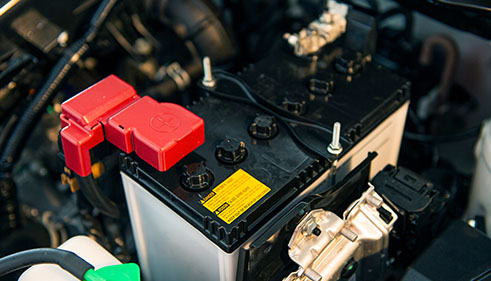
Lead acid battery:
Lead acid batteries are the oldest existing rechargeable batteries, invented by French doctor Gaston Plant é in 1859.
According to the differences in structure and usage of lead-acid batteries, they can be roughly divided into four categories: 1. Lead acid batteries for starting; 2. Lead acid batteries for power use; 3. Fixed valve regulated sealed lead-acid battery; 4. Other categories include small valve regulated sealed lead-acid batteries, lead-acid batteries for mining lamps, etc.
The nominal voltage of a single-cell lead-acid battery is 2.0V, which can discharge to 1.5V and charge to 2.4V. In applications, six single-cell lead-acid batteries are often connected in series to form a lead-acid battery with a nominal voltage of 12V. There are also 24V, 36V, 48V, etc.
Lead acid batteries are rechargeable batteries with advantages such as low cost, long service life (up to several years), large capacity (about 20 ampere hours/kg), and high safety (no explosion hazard).
However, lead-acid batteries also have some drawbacks, such as the need for regular maintenance, traditional lead-acid batteries requiring electrolyte replacement, high self discharge rates, and environmental pollution. In addition, due to the significant harm of lead to the environment, environmental awareness has been continuously increasing in recent years, resulting in a gradual decrease in the market share of lead-acid batteries.
Although lead-acid batteries have existed for a long time, their development prospects are still very broad. With the continuous advancement of technology and people's increasing awareness of environmental protection, lead-acid batteries may have more applications and developments in the future. For example, lead-acid batteries can be used in fields such as electric vehicles and energy storage systems, and due to their low cost and high energy density, they are also expected to become an important means of renewable energy storage. In addition, due to the rapid development of lithium-ion battery technology, some researchers are also exploring ways to combine lead-acid batteries with lithium-ion batteries to improve battery performance and extend service life. Therefore, although more advanced battery technologies have emerged in the current market, lead-acid batteries will still play an important role in the future energy storage field.
Lithium battery
Lithium battery refers to a type of battery that uses lithium ions (Li+) as the positive electrode active material. It has the advantages of high energy density, long lifespan, and low self discharge rate, and is therefore widely used in fields such as electronic devices and electric vehicles. With the rapid development of technology, the technology of lithium batteries is also constantly advancing. Therefore, in the future development, vehicle companies may gradually enter or extend into the field of lithium batteries to enhance product competitiveness.
Lithium batteries have some advantages and disadvantages.
Advantages:
1. High energy density: Lithium batteries have a higher energy density and can store more electrical energy;
2. Longer range: Due to its high energy density, lithium batteries can provide longer driving distances;
3. Low self discharge rate: When not used for a long time after charging, the self discharge rate of lithium batteries is low, which extends their service life;
Disadvantages:
1. High cost: The production cost of lithium batteries is relatively high, which limits their application in certain fields;
2. Safety hazards: Although the safety performance is high, overcharging, short circuits, and other situations may still cause battery damage or even fire;
3. Poor recyclability: Currently, most lithium batteries on the market are not recyclable, causing certain pollution to the environment;
4. Temperature sensitivity: In high temperature environments, the performance of lithium batteries may be affected, and attention should be paid to the temperature range of battery use.
With the rapid development and popularization of the new energy vehicle market, the demand for lithium batteries will further increase; At the same time, the energy storage market will also experience explosive growth, providing broad development space for lithium batteries. In addition, the application of lithium batteries in consumer electronics products such as smartphones and tablets is gradually expanding, which also indicates its huge potential for future development. However, due to limited lithium resources and difficult mining, the production cost of lithium batteries is high, which may limit their widespread application in certain fields. To solve this problem, it is necessary to promote the further development of lithium batteries by improving production efficiency and reducing material costs. Overall, lithium batteries, as an important energy technology, have a very broad development prospect. With the advancement of technology and policy support, lithium batteries will be widely applied in more fields and promote the development of the entire industry chain towards greater efficiency and sustainability.
Lithium batteries and lead-acid batteries are also two common types of electric vehicle batteries, each with its own advantages and disadvantages. Here is a brief comparison of these two battery types:
1. Lithium battery:
Advantages: High energy density, fast charging speed, long lifespan (up to 5-8 years).
Disadvantages: High price, poor low-temperature performance, and higher maintenance costs required.
2. Lead acid batteries:
Advantages: Low price, easy to maintain and repair.
Disadvantages: Small capacity, long charging time, low energy density.
Secondly, when choosing a battery, the following factors need to be considered:
1. Weight: If purchasing a car battery, the vehicle's own weight may affect its performance and handling. Therefore, reducing the weight appropriately can improve the overall performance of the vehicle. Lead acid batteries are more suitable for reducing the weight of a vehicle than lithium batteries;
2. Cost: Lithium batteries are relatively expensive, while lead-acid batteries are cheaper. Therefore, for users who hope to save costs, lead-acid batteries may be a better choice;
3. Availability: In certain situations, such as prolonged parking or low temperature environments, the endurance of lithium batteries may be affected. In contrast, lead-acid batteries have higher durability and reliability;
4. Environmental impact: Due to the significant impact of chemicals used in the production process on the environment, environmentally friendly products should be selected as much as possible when choosing batteries.
5. Safety: People are most concerned about whether the battery will explode. Now we can tell everyone that lead-acid batteries will not explode, while lithium batteries will.
In summary, both lead-acid batteries and lithium batteries have their own advantages and applicable scenarios. The choice of battery type depends on your needs and usage scenarios. If you value range and fast charging capability, and are willing to pay a high price for high performance, then you can choose lithium batteries; If you are more concerned about price and maintenance costs, and do not have high requirements for battery life, you can consider lead-acid batteries. Lithium batteries have higher energy density and longer endurance, but they also have certain safety hazards such as explosions and fires. Therefore, for electric vehicles, the choice between using lithium batteries or lead-acid batteries requires comprehensive consideration of various factors, including cost, performance, and safety. Generally speaking, large enterprises will adopt more mature and stable lead-acid battery technology, while some small enterprises may try to use new technologies or materials to improve the safety and stability of batteries.


Copyright © 2026 KWEIGHT TECHNOLOGY LTD. Powered by sznbone




 LANGUAGE
 Previous article

 Sep.09.2020